
Home Decor
10 Kitchen Decor Essentials That Make Your Kitchen Look Stylish and Feel More Practical
A stylish kitchen is not necessarily a kitchen filled with decorative objects.
In fact, some of the most beautiful kitchens are built around a very simple idea: the things you use every day should also be pleasant to look at.
Wooden spoons, cutting boards, olive oil bottles, ceramic jars, herbs, fruit bowls, and even a small lamp can all become part of the decor when they are chosen and arranged thoughtfully.
The result is a kitchen that feels warm and lived-in without becoming cluttered.
Here are ten objects I think make the biggest difference.
1. Wooden Cutting Boards
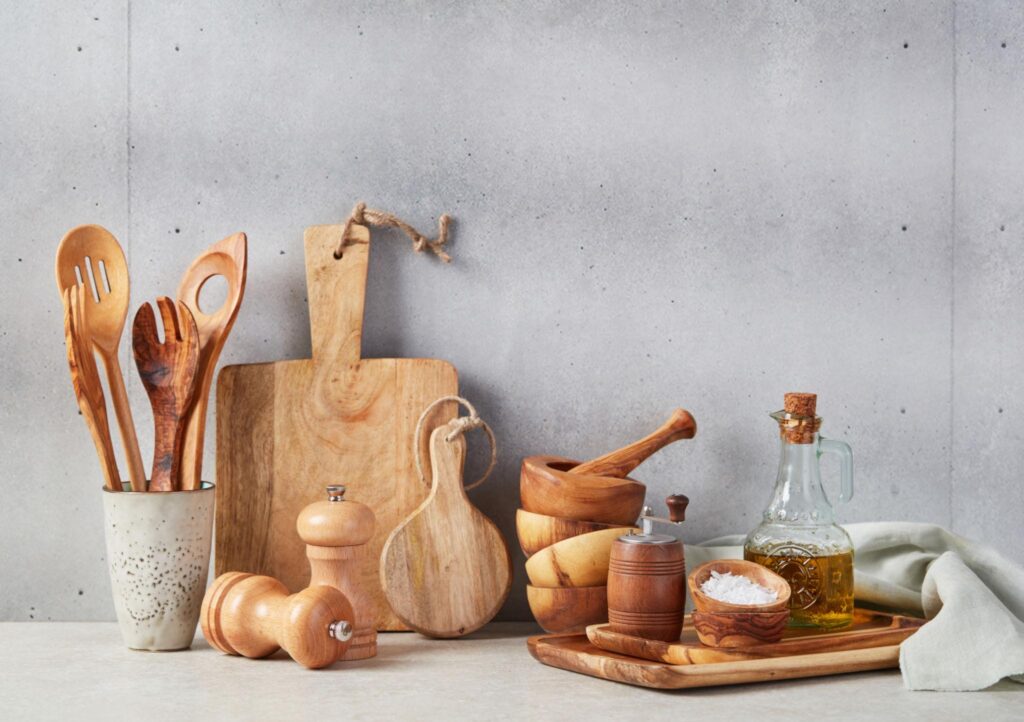
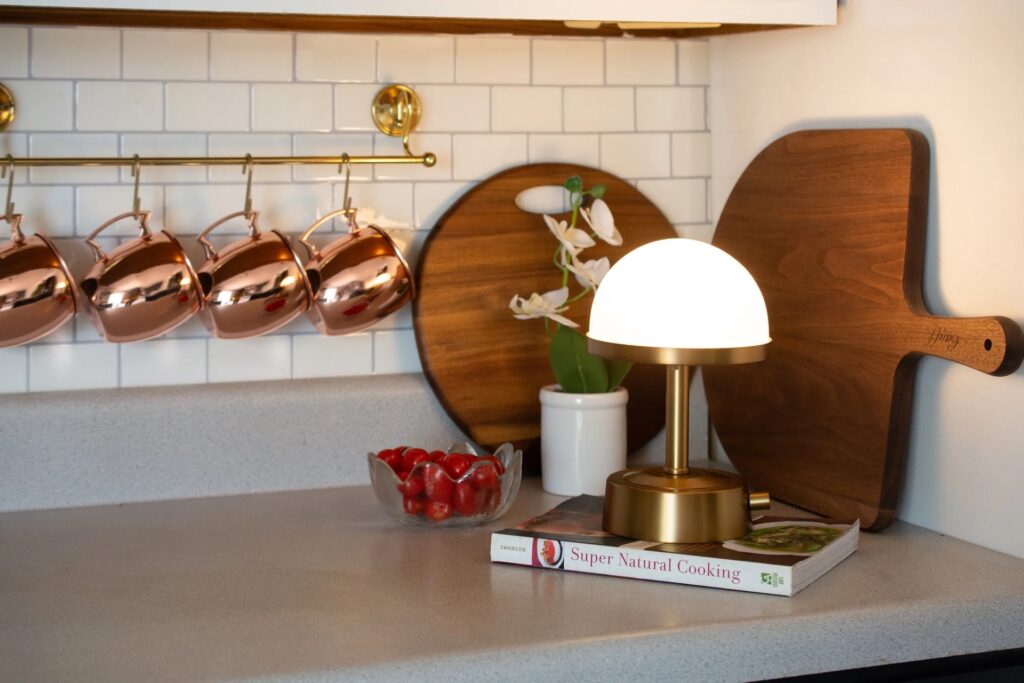
Wooden cutting boards are probably one of the easiest ways to make a kitchen feel warmer.
Instead of hiding every board inside a cabinet, I like leaning two or three against the backsplash. Mixing different sizes and shapes creates a layered look without taking up much usable counter space.
A rectangular board works well as the largest piece, while a smaller rounded or paddle-shaped board can sit in front.
The best part is that this is not decoration you need to move every time you cook. These are objects you can actually use.
Wood is particularly effective in kitchens with a lot of white cabinetry, stone countertops, or stainless-steel appliances because it breaks up those colder surfaces.
Best for
Warm minimal, rustic, farmhouse, Japandi, Mediterranean, and organic-modern kitchens.
2. A Ceramic Utensil Crock with Wooden Spoons
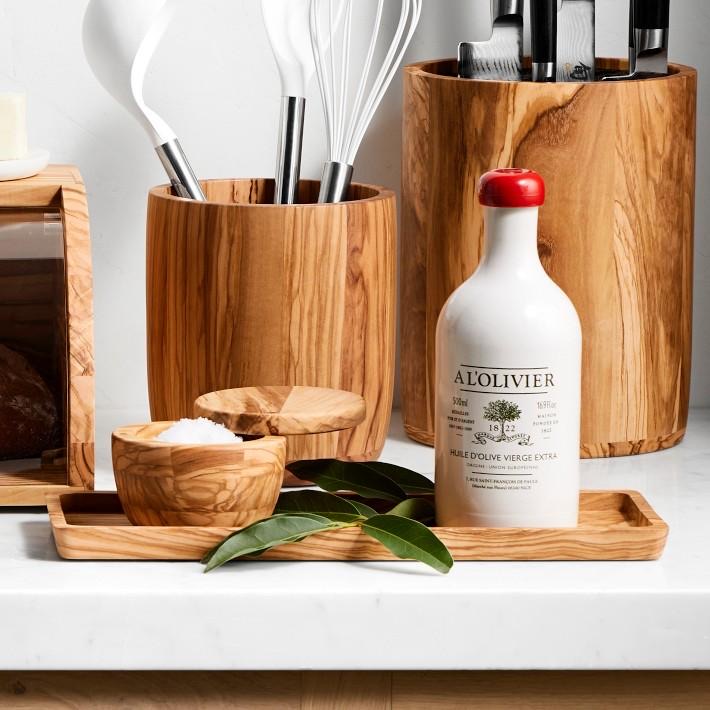
Wooden spoons and cooking utensils can be surprisingly decorative.
Placed inside a simple ceramic or wooden crock, they add height and texture to the countertop while staying within easy reach of the stove.
I prefer keeping only the tools I actually use frequently on display.
A crock overflowing with twenty mismatched utensils can quickly make a kitchen look cluttered. A smaller collection of wooden spoons, spatulas, and a whisk usually looks much more intentional.
A neutral cream or speckled ceramic holder is particularly easy to style.
Best for
Cooking zones beside the stove, neutral kitchens, cottage interiors, and organic-modern spaces.
3. Olive Oil and Vinegar Bottles
Olive oil is something many of us use almost every day, so it makes sense to keep it within reach.
But instead of leaving a collection of brightly branded bottles on the countertop, I prefer using one attractive oil dispenser or decanter.
Ceramic, tinted glass, and simple clear-glass bottles all work well.
This is one of those tiny changes that can make the cooking area feel significantly calmer.
Pair the oil bottle with a salt cellar and pepper mill, and you instantly have a small cooking station rather than several random objects spread across the counter.
Styling tip
Try grouping these items together instead of placing them individually around the kitchen.
4. A Wooden or Stone Countertop Tray
A countertop tray is less about decoration and more about visual organization.
That is exactly why I like it.
When oil bottles, salt, pepper, and utensils sit directly on the counter, they can look scattered. Place the same objects on one wooden, stone, or marble tray and suddenly the arrangement feels deliberate.
It also makes cleaning easier because several items can be moved at once.
For most kitchens, I would keep the tray relatively small.
It should organize your essentials without stealing too much workspace.
My favorite combinations
Wood tray + ceramic containers
Marble tray + glass bottles
Stone tray + wooden pepper mill
Woven tray + small herb pot
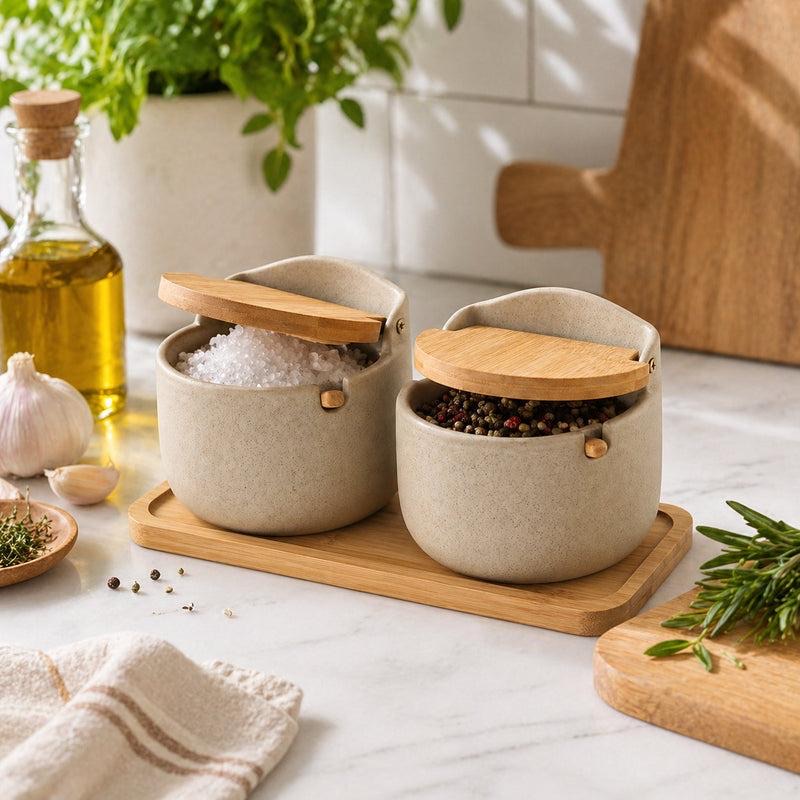
5. Ceramic Salt and Pepper Cellars
Salt cellars are one of those kitchen objects that become surprisingly useful once you start using them.
Instead of constantly opening containers while cooking, you can simply reach in for a pinch of salt.
From a decor perspective, ceramic versions are also much nicer to leave on the counter.
The example above combines warm stoneware with small wooden lids, which works beautifully alongside herbs, olive oil, and wood cutting boards.
I particularly like having separate containers for salt and pepper.
They provide function while adding another subtle texture to the counter.
6. A Wooden Fruit Bowl
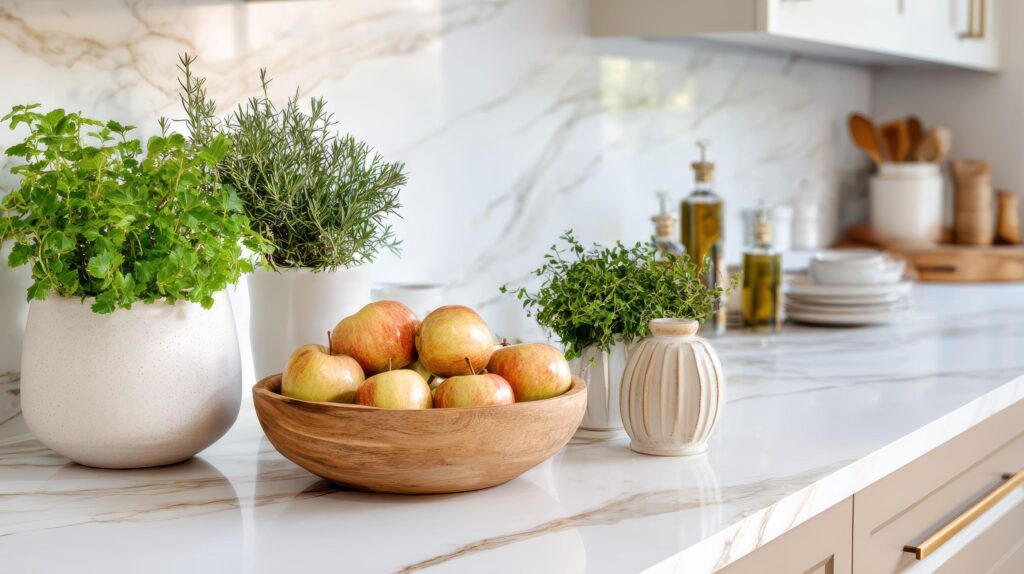
A bowl of real fruit is one of my favorite forms of kitchen decor because nothing about it feels forced.
Apples, pears, lemons, oranges, or even garlic can naturally introduce color into a neutral space.
A wooden bowl adds additional warmth and texture.
The key is choosing a bowl with enough visual character that it still looks attractive when it is not completely full.
I especially like shallow wooden bowls rather than very tall fruit baskets because they keep the arrangement visually relaxed.
Easy color combinations
Lemons + warm wood
Green pears + cream ceramics
Red apples + natural stone
Oranges + terracotta
7. Fresh Herbs in Simple Pots
Plants belong naturally in kitchens.
But rather than adding purely decorative houseplants everywhere, I especially like using herbs.
Rosemary, basil, mint, and thyme provide the same freshness and greenery while also being useful for cooking.
Terracotta pots create a warmer Mediterranean feeling.
Cream ceramic planters feel softer and more contemporary.
If your kitchen has a sunny window, a small herb grouping can turn an otherwise empty area into one of the nicest parts of the room.
I would keep it simple: two or three healthy plants are usually enough.
8. A Small Countertop Lamp
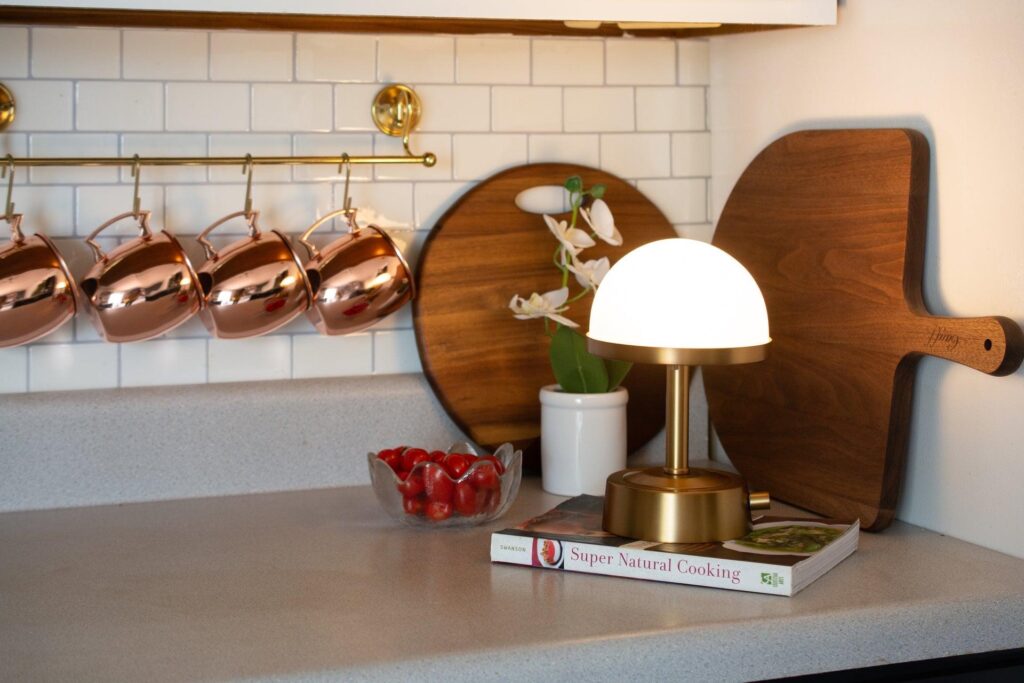
This is one of my favorite kitchen ideas because it changes the atmosphere rather than simply filling space.
A small table lamp on the countertop creates a soft layer of light that ceiling fixtures cannot really reproduce.
After dinner, you can turn off the bright overhead lights and leave the little lamp glowing.
The kitchen immediately feels calmer and more connected to the living spaces around it.
I like compact lamps with:
a ceramic base,
a linen shade,
a small brass base,
or a simple mushroom-style silhouette.
Just place them away from the sink, steam, and heavy cooking splatter.
9. Wooden Pepper Mills, Mortar and Pestle, and Everyday Tools
A beautiful pepper mill, mortar and pestle, or wooden bowl is another example of kitchen equipment that does not need to be hidden.
Objects with strong natural materials actually make a countertop look more interesting.
I especially like wooden tools because every grain pattern is slightly different.
A mortar and pestle near the stove also adds a little old-world character while remaining genuinely useful for herbs, spices, garlic, and sauces.
The important thing is not to display every kitchen tool you own.
Choose two or three visually strong pieces and let them breathe.
10. A Small Cooking Station Beside the Stove
Rather than spreading useful objects across the entire kitchen, I like creating one dedicated cooking station.
A simple version could include:
- one olive oil bottle,
- salt and pepper,
- one utensil crock,
- and perhaps a small wooden board.
That is enough.
The advantage is that everything you reach for most frequently is in the same area.
At the same time, the rest of the counter remains relatively clear.
This is probably the best example of kitchen decor and organization working together.
My Favorite Kitchen Counter Formula
If I were styling a kitchen from scratch, I would not fill every surface.
I would create a few intentional zones.
Beside the stove
Olive oil + salt cellar + utensil crock on a small tray.
Against the backsplash
Two or three layered wooden cutting boards.
On the island
One beautiful bowl filled with fruit.
Near a window
One or two herb plants.
In an unused corner
One small warm lamp.
That is already enough to make a kitchen feel much more finished.
The Materials Matter More Than the Number of Objects
One thing I notice again and again in beautiful kitchens is that the objects usually share a consistent material story.
The easiest combination to work with is:
wood + ceramic + glass + stone + greenery.
These materials complement one another without looking overly coordinated.
For example, you might have:
a walnut cutting board,
a cream ceramic utensil pot,
a clear olive oil bottle,
a stone salt cellar,
and a small rosemary plant.
None of those pieces needs to match exactly.
They simply need to feel like they belong in the same environment.
What I Would Avoid
The goal is not to decorate every available centimeter of counter space.
A kitchen still needs room for preparing food, unpacking groceries, cleaning, and everyday life.
I would avoid covering the countertop with too many purely decorative pieces.
The easiest rule is:
If an object is useful and beautiful, let it stay out. If it is neither, give it a home inside a cabinet.
That simple approach prevents kitchen styling from turning into clutter.
Final Thoughts
The most attractive kitchen accessories are often not traditional decorations at all.
They are everyday objects made beautiful:
a wooden cutting board, a ceramic utensil crock, a bottle of olive oil, a pepper mill, a bowl of fruit, a herb pot, or a small lamp.
These things give a kitchen texture and personality while making it easier to use.
That is why I prefer this approach to filling a counter with signs, figurines, or purely ornamental pieces.
A kitchen should still feel like a place where someone actually cooks.
When the useful objects are beautiful enough to become part of the decor, you get the best balance:
a kitchen that looks thoughtfully styled but still feels comfortable, functional, and genuinely lived in.
