
Home Decor
5 Artistic Wall Clocks That Feel More Like Sculptures Than Timepieces
A wall clock is usually treated as a practical object first and a decorative piece second. But the five designs below completely reverse that idea.
These clocks do more than tell time. They bring texture, shape, craftsmanship, and personality into a room, making them feel closer to wall art than conventional home accessories.
What I like most about this collection is that each piece has a very different character. Some lean toward natural minimalism, while others feel playful, artistic, sculptural, or almost architectural.
If you are looking for a wall clock that can actually become part of the room’s visual identity, these are the kinds of designs worth paying attention to.
1. Live-Edge Wooden Wall Clock — Natural, Minimal, and Timeless
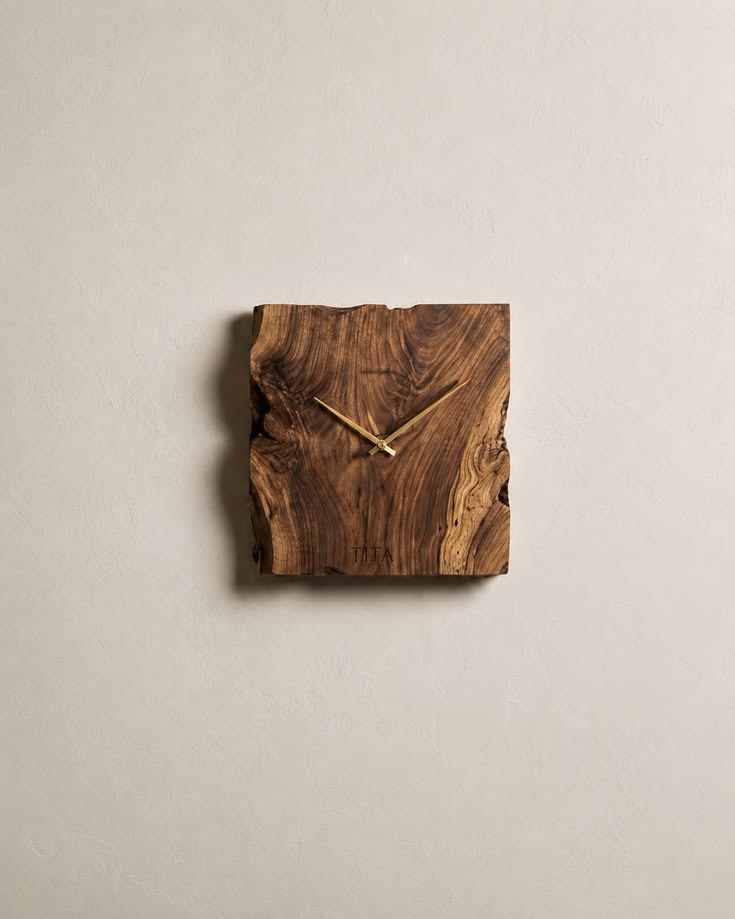
This is the most understated clock of the group, but it may also be one of the easiest to live with.
The body appears to be made from a solid slab of richly grained wood, with irregular live edges left visible rather than being cut into a perfect geometric shape. That detail immediately makes the piece feel handmade and organic.
Instead of adding large hour markers, the design allows the natural wood grain to do most of the visual work. The slim metallic hands provide just enough contrast without competing with the surface.
I particularly like the balance between rustic material and minimalist execution. A live-edge slab can sometimes feel very farmhouse or traditional, but here the lack of decorative numbering keeps it modern.
Placed on a plain warm-white wall, the clock almost reads like a small wooden artwork.
The natural variation in grain would also mean that pieces in this style could have a slightly different personality from one another, which is part of the appeal.
Best for: Japandi interiors, organic modern homes, minimalist living rooms, warm contemporary bedrooms, and spaces with natural wood furniture.
What stands out to me
The strongest feature is the material itself. Nothing feels unnecessary. The clock hands are secondary, while the timber remains the main decorative element.
If your home already uses walnut, oak, linen, stone, or other natural finishes, this style would integrate very easily.
2. Artist Palette Wall Clock — Playful, Creative, and Full of Personality
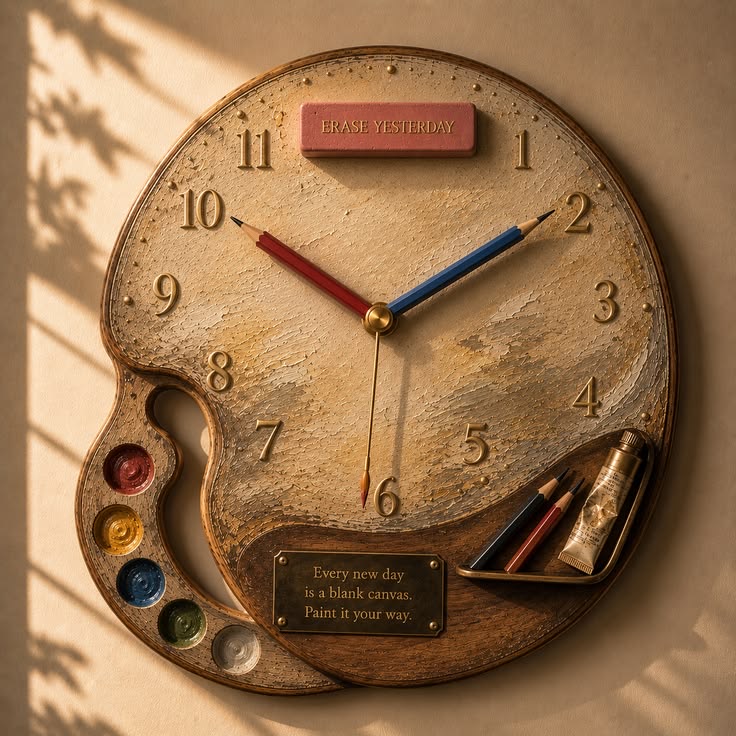
This is easily the most playful design in the collection.
The entire clock is shaped like a painter’s palette, complete with painted color wells, pencils forming the clock hands, an eraser detail at the top, and art tools incorporated directly into the composition.
It feels less like a standard wall clock and more like a piece of themed wall art that happens to tell time.
One detail I especially like is the use of familiar studio objects as functional parts of the design. Instead of simply printing an artist motif onto a round clock face, the entire structure is built around the idea.
The earthy wood tones and slightly aged surface prevent it from feeling too childish. That makes it suitable not only for a kids’ art room but also for a studio, creative office, craft room, or eclectic living space.
The typography and small decorative phrases add another layer of personality without taking attention away from the main palette shape.
This is definitely not a neutral clock. It wants to be noticed.
Best for: art studios, craft rooms, creative offices, kids’ creative spaces, eclectic interiors, and anyone who enjoys whimsical decor.
What stands out to me
I like that it does not take itself too seriously.
Many decorative clocks become overly formal, whereas this one feels personal and expressive. It could make a blank creative workspace feel much more memorable.
3. Nautilus Shell Wall Clock — Sculptural and Coastal Without Being Obvious
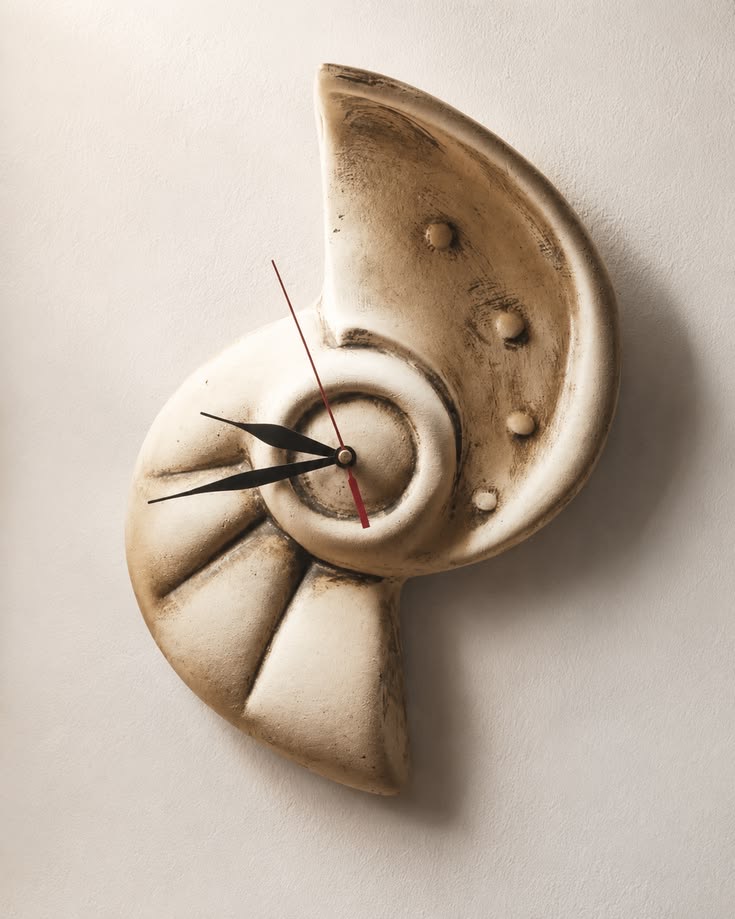
This is probably the most sculptural design of the five.
The clock is shaped like a nautilus or spiral shell, using a softly aged cream finish with darker distressing around the recessed lines. The result is something that feels almost archaeological.
Instead of relying on numbers, the shape itself becomes the main feature.
The black hands stand out clearly against the pale surface, while the thin red second hand adds a subtle modern contrast.
What makes this interesting is that it could work in coastal interiors without using the usual obvious beach motifs. There are no anchors, ropes, or blue-and-white patterns. The reference to the sea comes entirely through form.
That gives it much broader decorating potential.
I could also see it working beautifully in a Mediterranean-style interior, a warm minimalist room, or an art-focused space where organic forms are used as accents.
Because the clock has noticeable depth and relief, it creates shadows on the wall and feels more three-dimensional than a standard flat clock.
Best for: coastal interiors, Mediterranean decor, organic modern rooms, sculptural spaces, and neutral homes that need one unusual focal point.
What stands out to me
The shape.
Even with the clock mechanism removed, this object would still work as wall decor. That is usually a good sign that the design is strong enough to stand on its own.
4. Textured Stone and Moss Clock — Raw, Earthy, and Almost Architectural
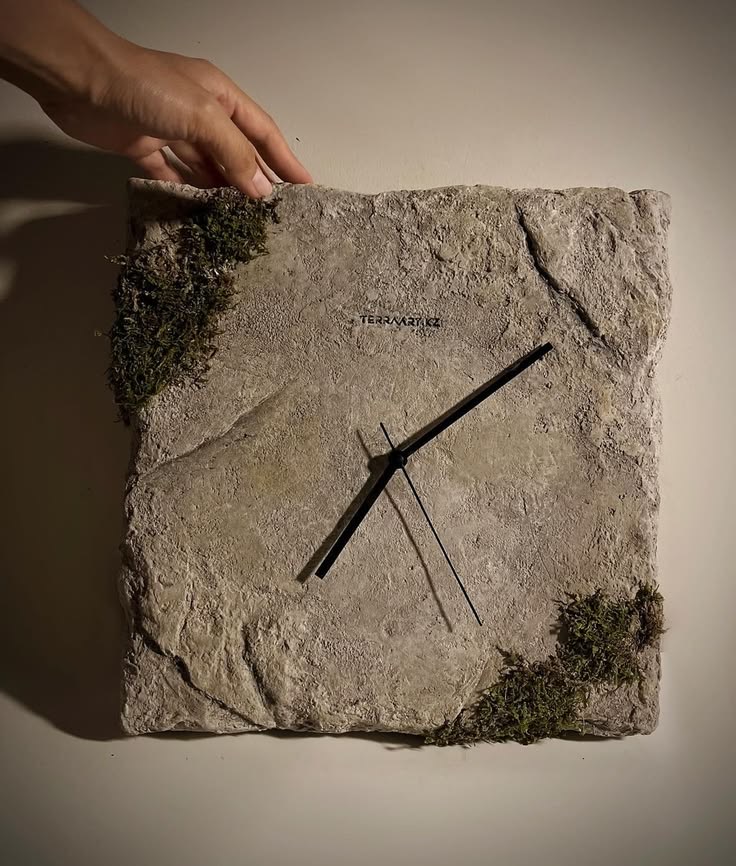
This design goes in a completely different direction.
The square face looks like a rough slab of weathered stone, complete with cracks, uneven edges, and patches of moss growing into the corners.
The clock hands are extremely simple and dark, almost disappearing into the textured surface.
What I like about this design is the tension between something very precise—the measurement of time—and something that looks ancient and slowly weathered.
It creates a very calm, tactile feeling.
The clock seems inspired by natural landscapes, stone architecture, moss-covered walls, and wabi-sabi design. The imperfections are not hidden; they are actually the entire visual point.
This would look especially good in a room with raw plaster walls, concrete, warm wood, linen fabrics, pottery, and lots of greenery.
It would probably feel less successful in a glossy or highly polished interior because its strength comes from natural imperfection.
Best for: wabi-sabi interiors, organic modern spaces, natural minimalist homes, spa-inspired rooms, and interiors using stone, clay, or raw plaster finishes.
What stands out to me
The surface texture is much more important than the clock mechanism.
This feels like a piece that you notice from across the room because of its material quality, then only afterward realize that it is actually a clock.
5. Organic Sculptural Wood Clock — Soft, Modern, and Surprisingly Elegant
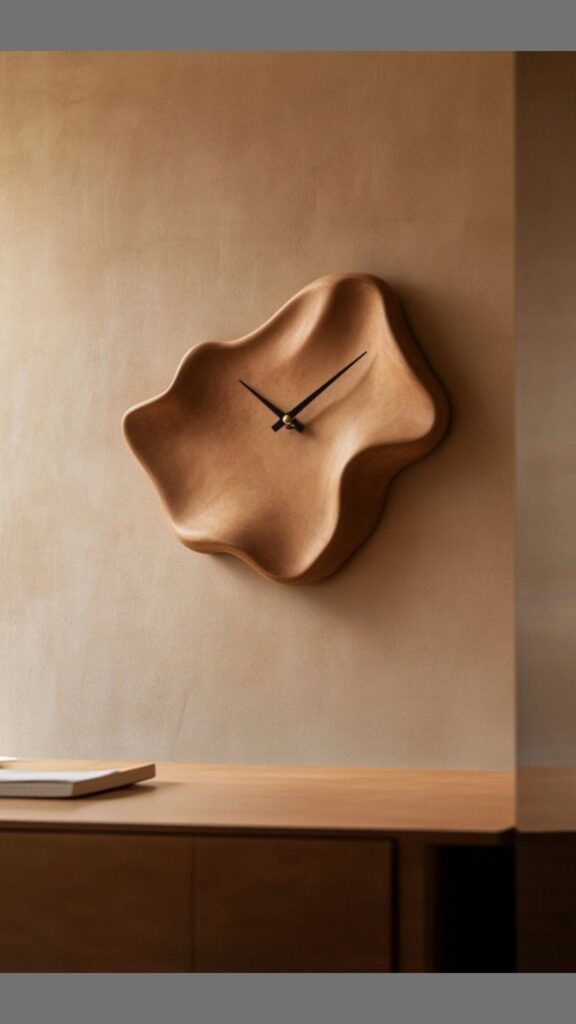
This final clock is probably the most contemporary design in the group.
Instead of using a flat face, the clock appears to have a soft, inflated, almost cushion-like wooden form with gently undulating edges.
That three-dimensional shape gives it a very sculptural appearance.
The warm brown finish works beautifully with the beige wall and wooden furniture below it. Because the design has no visible numbers or additional decoration, the form becomes the centerpiece.
This type of clock is especially interesting in minimalist rooms because it introduces movement without introducing visual clutter.
The irregular shape keeps the space from feeling overly rigid, while the neutral color palette maintains a calm atmosphere.
It reminds me of the broader organic-design trend where furniture and decor use rounded, imperfect silhouettes rather than strict rectangles and circles.
The result feels modern without looking cold.
Best for: contemporary interiors, organic modern rooms, warm minimalist homes, Japandi-inspired spaces, and rooms with curved furniture.
What stands out to me
The balance between simplicity and sculpture.
It does not need unusual materials, bright colors, or decorative detailing to make an impact. The shape alone does the work.
Which Wall Clock Would I Choose?
These five designs are different enough that I would not compare them purely on appearance.
I would choose based on the mood of the room.
| Interior Style or Goal | Clock I Would Choose |
|---|---|
| Warm minimalist room | Live-edge wooden clock |
| Creative studio or art room | Artist palette clock |
| Coastal or sculptural interior | Nautilus shell clock |
| Wabi-sabi or natural interior | Stone and moss clock |
| Contemporary organic room | Sculptural wooden clock |
If I wanted the most versatile option, I would choose the live-edge wooden clock.
The natural wood gives it character, but the simple design means it would work with many different interiors.
If I wanted the most memorable statement piece, the nautilus clock would probably be my choice.
And if the goal was to create a calm, high-end contemporary space, I would lean toward the final sculptural wood design.
What Makes a Decorative Wall Clock Look Expensive?
Looking at these five examples, one pattern stands out very clearly.
The most successful clocks do not rely on printed decoration.
Instead, they use material, shape, texture, and depth.
The wood clock uses grain.
The shell clock uses form.
The stone clock uses surface texture.
The sculptural clock uses volume.
That is why they feel more like decor objects than accessories.
Another important detail is restraint.
Even the artist palette clock, which is by far the busiest design, still keeps a coherent theme throughout the piece.
A decorative object usually looks more considered when every visual element supports the same idea.
How I Would Style These Clocks
I would give each of these designs more empty wall space than I would give a traditional clock.
They are visually strong enough that surrounding them with too many frames or decorative objects could make the wall feel crowded.
For the live-edge wood clock, I would pair it with warm plaster walls, walnut furniture, and simple ceramics.
For the artist palette clock, I would place it near books, art supplies, prints, or a creative desk.
The nautilus design would look beautiful above a console table with stoneware, textured pottery, and a small lamp.
The stone clock would benefit from greenery, rough ceramic planters, and natural textiles.
And for the sculptural wooden clock, I would keep the styling extremely minimal—perhaps one console, one book, and one ceramic object underneath.
A Note on Size
One thing that is easy to overlook with decorative clocks is scale.
A clock can look impressive in a close-up photograph but feel surprisingly small once placed on a large wall.
For statement designs like these, I generally prefer giving them enough visual presence that they do not look lost.
Above a console, sideboard, or desk, the clock should visually relate to the furniture underneath rather than appearing like a tiny object floating in the middle of the wall.
On the other hand, highly sculptural pieces often look better with generous negative space around them.
The goal is not necessarily to fill the wall.
It is to create a clear focal point.
Decorative Clock vs. Wall Art
One reason I find these designs interesting is that they sit somewhere between two categories.
They are clocks, but they behave like art.
And that can actually simplify decorating.
Instead of hanging a print and then trying to find another location for a clock, one sculptural clock can perform both functions.
This works particularly well in smaller rooms where too many wall objects can quickly make the interior feel cluttered.
A single strong object often feels more intentional than several smaller decorative pieces.
Final Thoughts
The best decorative clocks are not simply prettier versions of ordinary clocks.
They change how the wall itself feels.
A live-edge wood clock brings warmth and natural texture.
An artist palette adds personality.
A shell-shaped clock introduces sculpture.
A rough stone clock creates an earthy, almost ancient mood.
And an organic wood form adds quiet contemporary character.
What connects all five is that telling time is almost secondary to the design.
That is exactly why they work so well as decor.
If I were decorating a room with one of these, I would treat it the same way I would treat a piece of artwork: give it enough space, choose a location where it can be appreciated, and let its material and shape influence the objects around it.
A wall clock may be functional, but with the right design, it can become one of the most interesting pieces in the room.
